UK High Court Finds Infringement of Copyright in Wine Labels
The UK High Court has recently found copyright infringement in a case involving art used on wine labels. Despite the infringement, the artist was limited in the remedies available to her. Our Intellectual Property team reviews the implications.
Introduction
The UK Intellectual Property Enterprise Court (IPEC) has recently found in favour of the artist Shantell Martin and her company. The case involved the unauthorised use of her distinctive wall drawing on wine labels sold in the UK. The IPEC found both copyright infringement and passing off regarding one particular wine label. However the same claims failed regarding two other wine labels. We consider the key learnings from the decision for artists seeking to protect their creations, and for food and beverage companies.
Background
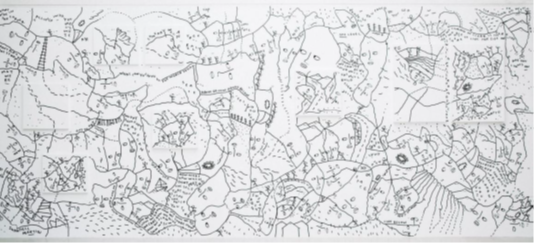
Shantell Martin created the wall drawing, shown below, as part of a solo exhibition in 2017. Ms Martin assigned copyright in this work to her company, Found the Found LLC in June 2021.
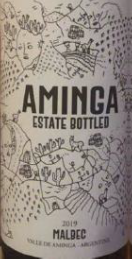
A winery based in Argentina named Bodegas San Huberto (BSH) and its director, Marc Patch, together with a UK based wine importer and distributor, GM Drinks Limited (GM Drinks) produced and sold wines in the UK using the following three labels.
| First Table | Second Label | Third Label |
 |  |  |
Proceedings were commenced in June 2022, and Found the Found LLC claimed:
- Copyright infringement
- Infringement of Ms Martin’s moral right to be identified as the author of the work, and
- Passing off
IPEC decision - copyright infringement
The IPEC held that the First Label is clearly a copy of the work. It also held that there are particular features of Ms Martin’s work which are identically reproduced in the First Label. The copyright infringement claim was therefore upheld for the First Label.
For the Second Label however, the IPEC held that there was no copyright infringement. It found that there were clear differences between this label and the work. For example, the Second Label included no humanoid faces, and it clearly has perspective. On the contrary, a key element of Ms Martin’s style was to mix humanoid faces with geographic elements, devoid of perspective. This was also largely done using black lines on a white background.
For the Third Label, similarly the IPEC held that there was no infringement and that it was sufficiently different from the work not to include any of Ms Martin’s intellectual creation.
IPEC decision – moral rights infringement
The IPEC declined to decide the moral rights infringement claim as it was not detailed in the List of Issues for the proceedings. However, had the claim been admitted it would have only been successful for the First Label Products which were sold in the UK after 13 April 2020. This was the date that the defendants received correspondence from Found the Found LLC.
IPEC decision – passing off
The IPEC also upheld the passing off claim for the First Label products. At trial, Found the Found LLC provided evidence of consumer confusion. The IPEC was satisfied that Ms Martin had at all relevant times, the requisite goodwill. The First Label was sufficiently similar to Ms Martin’s work, according to the IPEC, to create a misrepresentation that she had endorsed the First Label product.
IPEC decision – damages
Although there was a split decision regarding the three labels , without judging the issue, the IPEC offered the following guidance on the remedies available to Found the Found LLC:
- Total profits earned by the defendants on sales of the First Label products were £924 only, and
- The claimants were not entitled to damages for copyright infringement. This was because, in accordance with section 97 of the UK Copyright Designs and Patents Act (CDPA), they “did not know, and had no reason to believe” that copyright subsisted in the First Label image.
Conclusion
There are a number of key learnings from the decision. Firstly, in a copyright infringement case concerning an artistic work, in this case, a wall drawing, the Courts will closely analyse and compare the two works side-by-side i.e. as the IPEC stated “it is what it looks like that matters.” This means that copyright protection will be available to artists where the copying is obvious, clear and substantial. However, the case also highlights the limited remedies available to rights holders where copyright infringement has been established.
Under Irish law, a similar provision to section 97 of the UK CDPA can be found under section 128(2) of the Copyright and Related Rights Act 2000 (as amended). The Irish law position is similarly that where it is proved or admitted that the infringer, at the time of the infringement, was not aware and had no reasonable grounds for suspecting that copyright existed in the work, then damages will not be awarded. In that circumstance however, the plaintiff is entitled to an account of profits rather than damages. That being said, the IPEC’s interpretation of the defence in holding that the defendant’s “did not know and had no reason to believe that copyright subsisted” in the First Label image is somewhat controversial and perhaps difficult to believe from a factual perspective. This outcome suggests that ignorance of copyright may result in defendant’s evading liability for infringement from both a UK and Irish law perspective which will remain a bone of contention for artists and those in the creative industries.
For more information and expert advice, contact a member of our Intellectual Property team.
People also ask
| Can this decision be appealed? |
| Yes, there is a right of appeal. |
| Is copyright registrable in the UK? |
| No, copyright subsists automatically on creation under UK law. |
| Does the copyright in the wine labels last indefinitely? |
| For artistic works, the general rule under EU and UK law is that copyright subsists for 70 years after the death of the creator of the work. |
The content of this article is provided for information purposes only and does not constitute legal or other advice.
Share this:

Gerard Kelly SC
Partner, Co-Head of Dispute Resolution and Head of Intellectual Property
+353 86 820 8066 gkelly@mhc.ie
Related Content


for the latest legal insights and invites