Near Unanimous Support for Judges Over Juries in Defamation Cases
Read the results of our latest industry survey
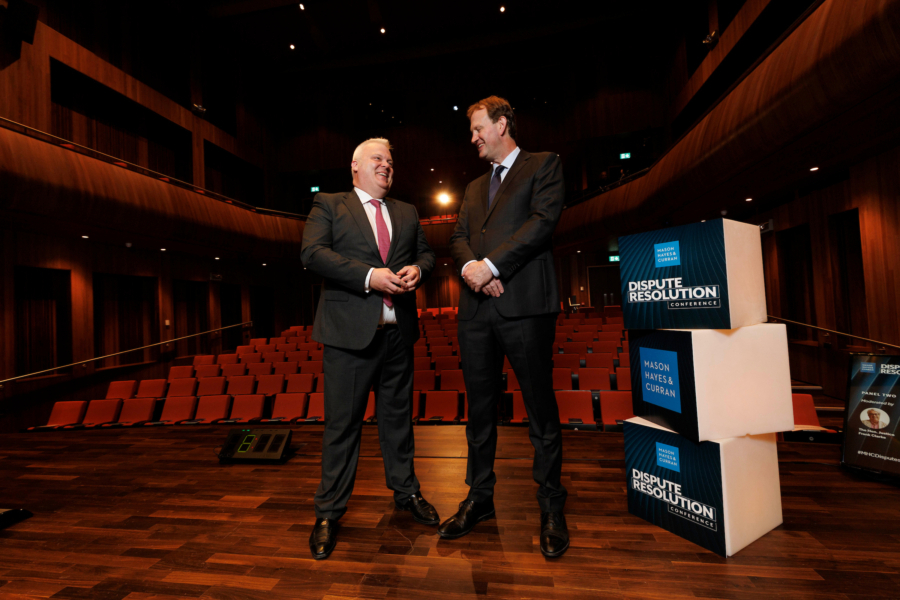
There is near unanimous support for judges over juries in defamation cases, our latest survey has found.
We polled 140 professionals at our Dispute Resolution Conference. Almost all respondents (95%) said they considered a judge would deliver more predictable outcomes on liability and damages.
The same percentage believe businesses are more vulnerable to reputational damage in the current digital media landscape. Two thirds (65%) also said that current defamation laws fail to strike the right balance between freedom of expression and protecting reputation.
Gerard Kelly SC, Co-Head of Dispute Resolution and Head of Intellectual Property, commented:
“Clients are increasingly concerned about unpredictable outcomes in jury trials particularly where there are complex legal issues to be resolved and a number of co-defendants in an online environment. The envisioned reforms should help reduce that uncertainty and provide more predictable results. We are already advising businesses on how to prepare for these changes.”
He added:
“The pace of online communication means reputational risks can escalate quickly. Reform that reflects this reality is essential if the courts are to meet modern challenges. It is noteworthy that 95% of those polled at our Dispute Resolution Conference indicated that they considered businesses more vulnerable to reputational damage in a digital environment.”
The keynote address was delivered by Minister for Justice, Home Affairs and Migration, Jim O’Callaghan TD, who discussed the reforms envisioned in the Defamation Bill 2024 and the potential introduction of third-party litigation funding in Ireland.
He told the audience that reform of Ireland’s defamation laws remained a key priority for the Government:
“My priority when it comes to defamation is enactment and commencement of the Defamation (Amendment) Bill as soon as possible…One of the key aims of the Bill is to support easier access to justice both for those whose reputations are unfairly attacked and for those subject to unfounded defamation hearings.”
Eimear O’Brien, Of Counsel with our Dispute Resolution team, added:
“We are seeing first-hand how businesses and publishers need certainty in defamation law. Clearer, more workable rules will make it easier for clients to manage disputes and reputational risk in a fast-moving digital landscape.”
Litigation Funding
The survey found that six in ten respondents (62%) do not support the introduction of third-party litigation funding in Ireland. This model allows outside investors to cover legal costs in return for a share of any award. Almost nine in ten (87%) believe it would increase speculative claims.
Colin Monaghan, Dispute Resolution Partner, commented:
“Litigation funding is well established in other jurisdictions, yet Ireland remains an outlier. We are beginning to see our courts take a broader approach to what may be allowed in this area, but without legislative reform, businesses and individuals are likely to still face unnecessary barriers to pursuing claims. Careful change in this area will play an important role in improving access to justice in Ireland.”
Rory Kirrane SC, Head of Construction, Infrastructure and Utilities, added:
"Any reform must be carefully designed. Our clients want greater certainty that they can pursue valid claims without disproportionate financial risk. A balanced framework must provide that access while preserving trust in the Irish courts.”
Share this:

Gerard Kelly SC
Partner, Co-Head of Dispute Resolution and Head of Intellectual Property
+353 86 820 8066 gkelly@mhc.ie

