Internet Explorer 11 (IE11) is not supported. For the best experience please open using Chrome, Firefox, Safari or MS Edge

Article Insight

Federal Court upholds infringement against Aldi Carrot puffs & copyright part II

Insights Food, Agribusiness & Beverage 07 Sep 2026 5 min read

Brand owners may be able to use copyright, alongside trade mark infringement and passing off claims, to challenge lookalike packaging. An Australian Federal Court ruling against Aldi shows that the overall combination of design elements can amount to infringement, even where individual features are common in the market. Our Intellectual Property team examines the decision and its implications for food and beverage companies.

What you need to know

  • Copyright can provide an additional means of challenging copycat product packaging.
  • Courts must compare competing designs side-by-side, considering their similarities, differences and overall visual effect.
  • Common design features may still infringe when their particular combination reproduces a substantial part of an original work.
  • An intention to avoid infringement does not provide a defence if protected elements have been copied.
  • Businesses should conduct wider intellectual property clearance before launch and seek appropriate indemnities from external design agencies.

Introduction

In a recent article, we reported on a Federal Court decision in Australia in which Aldi was held to be liable for copyright infringement. The case concerned the use of packaging on children’s food products. Aldi has now unsuccessfully appealed against that decision. The appeal before the Federal Court in Australia upheld the finding of infringement having thoroughly reconsidered the infringement question by conducting a side-by-side comparison of the relevant product packages. The Federal Court also analysed all the similarities and dissimilarities between the competing products to determine what had been copied by Aldi. This case is useful for brand owners and market leaders as it demonstrates how copyright, in addition to the usual complaints around trade mark infringement and passing off can be used to fight against copycat products. We examine the latest development in the ongoing dispute, and we consider the key takeaways for food and beverage companies.

Background

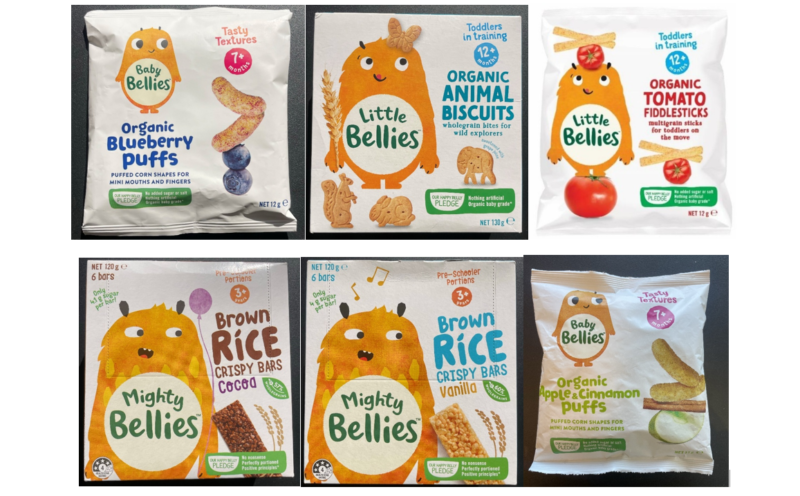
Hampden Holdings I.P. Pty Limited (Hampden) is the owner of copyright in artistic works comprising the front face of the packaging of baby and child food products sold under the marks BABY BELLIES, LITTLE BELLIES and MIGHTY BELLIES. Examples of those products are illustrated below.

Carrott Puffs Insight

The case concerns activities by Aldi in developing new packaging for rival baby and child food products sold in Aldi supermarkets under its MAMIA house brand. None of Hampden’s trade marks were used. The first instance judge concluded that Aldi set out to create artistic works for packaging that resembled Hampden’s products. However, he was of the view that Aldi’s intention was to avoid making the resemblance so close as to infringe any intellectual property rights. Consequently, the first instance judge ruled that Aldi was liable for copyright infringement. Aldi appealed the findings and Hampden cross-appealed the non-infringement findings.

Grounds 1-2 of the appeal

Aldi argued that the first instance judge was wrong to conclude that Aldi was liable for copyright infringement for the following reasons:

  1. There was a failure to make an evaluation of the Hampden works in the context of their originality. Aldi referred to this aspect as a failure on the part of the first instance judge to consider the nature and scope of Hampden’s copyright interest in the Hampden works.
  2. The first instance judge should have found that the copyright interest in each of the Hampden works was limited to the particular form of expression found in each work, being the “layout and design elements” found in each work.
  3. The first instance judge was wrong to reject the role and importance of differences between the Aldi ‘puff’ products and the Hampden ‘puff’ products.
  4. The first instance judge erred in concluding that Aldi should have called as a witness an employee of the design company engaged by Aldi. Aldi was therefore of the view that the failure to do so warranted the drawing of an adverse inference against it.
  5. The first instance judge failed to give proper effect to his finding that the purpose of Aldi’s benchmarking process was not to infringe Hampden’s legal rights. He should have taken that into account when considering the issue of substantial reproduction.

Decision on grounds 1-2

The Federal Court held on appeal that the consideration of whether the Aldi products reproduced a substantial part of any of the Hampden products required a multi-faceted analysis. Similarities included, for example, that each work has:

  • A cartoon figure, and most (but not all) of the figures have text in their belly
  • Photographs of ingredients and the product
  • Similar stylized text
  • Some matching colours
  • An age range in the top right
  • A rectangular coloured box with white writing, usually about the naturalness of the ingredients, and
  • A particular layout and structure, although it is not the same layout or structure in each case.

However, the Federal Court held that the similarities listed are not a relevant comparison. It was rather an identification of matters that would require more detailed consideration. Aldi therefore succeeded in its appeal in part as it argued that the first instance judge erred in:

  • Considering an abstracted list of features, rather than undertaking a side-by-side comparison of the similarities between the relevant copyright and impugned works. This would have involved considering the differences between the visual elements relied upon for the purposes of the comparison.
  • Failing to consider the evidence of the originality of those aspects of the work found to be objectively similar.

Grounds 3-5 of the appeal

Aldi argued that the first instance judge erred in finding Aldi liable for additional damages because:

  • Hampden failed to give proper notice of the basis for seeking additional damages
  • Aldi’s benchmarking process sought to avoid infringing the law, and therefore was not about copying per se
  • Aldi had no history of prior copyright infringements
  • No evidence was led to show the prospect of any loss to Hampden from the infringing conduct, and
  • Having regard to the circumstances, an award of additional damages was not warranted.

Decision on grounds 3-5

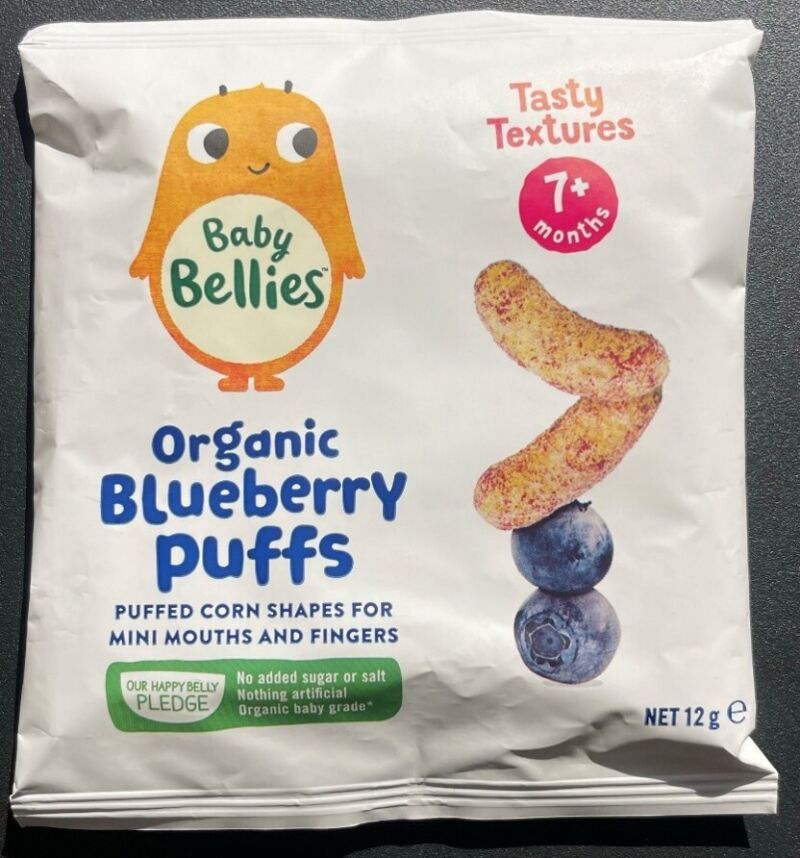
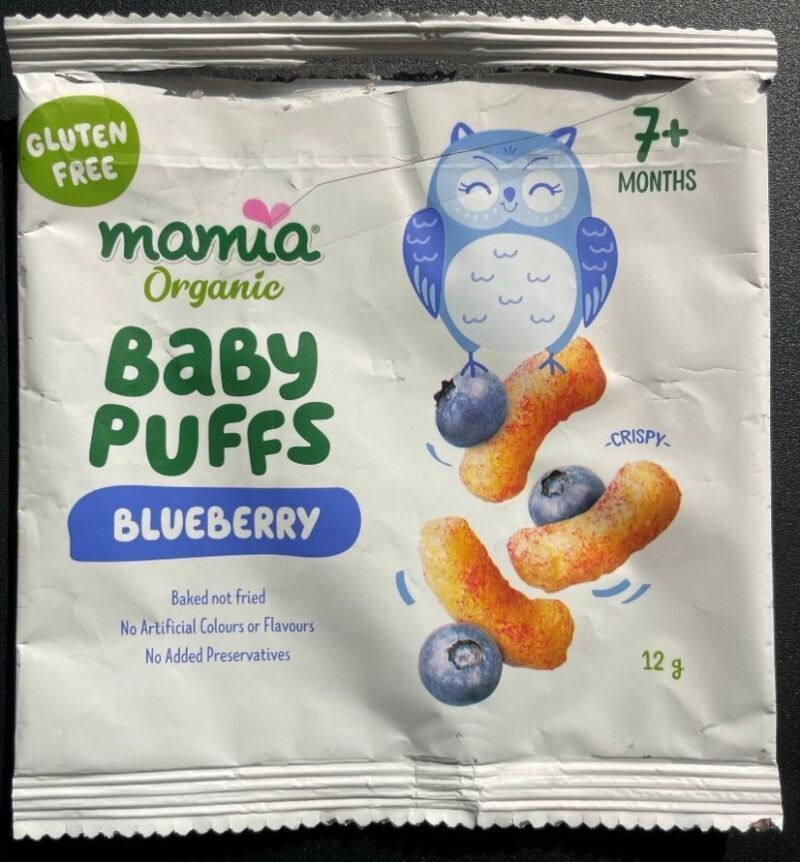
On the question of additional damages, the Federal Court held that any assessment could only follow from a conclusion as to whether Aldi had in fact infringed any of the Hampden works and if so, which ones. It then proceeded to carry out a re-consideration of the infringement question on the proper basis. Here is an example of one of the ‘puff works’ competing products which were analysed by the Federal Court:


After listing the similarities and differences between the packages in detail, the Federal Court noted that this is not an easy or clear-cut case. Despite this, it concluded that the Aldi product reproduced a substantial part of the Hampden product, and therefore this was an example of copyright infringement by Aldi. This was because:

  • The photographs of the blueberries and puffs on the Aldi product were sufficiently similar to the equivalent part of the Hampden products so as to amount, in large part, to a reproduction of that element.
  • When the photographs of blueberries and puffs are combined with the other elements of similarity – the colour palette, the distinctive child-like font, the two-column layout, the irregular rectangular boxes, the similarities in the cartoon character, the white background and the age indicator in the top right corner – it is apparent that the Aldi product appropriates numerous aspects of the Hampden product.
  • It was necessary to consider the evidence concerning the material already in the public domain, relied upon by Aldi. For example, Aldi emphasised the presence in other packaging of a friendly cartoon character, pictures of fruit and other ingredients, a two-column layout, a white background and an age indicator in the top right. However, the cartoon characters and pictures of ingredients, the Federal Court held, were different from the ones under consideration in this part of the analysis, and the layouts and combinations of elements were quite dissimilar.
  • The creation of the Hampden packaging involved a degree of skill, effort and creativity, and a material part of that skill, effort and creativity had been appropriated by Aldi.

In total, the Federal Court held that each of the Aldi ‘puff’ works was an infringement whereas only two of the ‘non-puff’ works amounted to infringement. Each of Aldi and Hampden were therefore successful in their appeal and cross-appeal in demonstrating that the first instance judge did not apply the correct approach in all the circumstances of the case.

Comment

The decision represents a limited win for both parties but as Aldi was ultimately unsuccessful in overturning the majority of the infringement findings, it will presumably be the unhappier of the two. It was also unsuccessful in overturning the additional damages awarded to Hampden. The Federal Court noted that Aldi continued to use the packaging for some months after being sent letters of demand by Hampden. On that point, the Federal Court noted that:

...if Aldi chooses to conduct its business in that manner, it runs the risk that infringement will lead to additional damages.”

The key takeaways for brand owners

  • Always conduct trade mark clearance searches and market research and diligence before proceeding with a new product launch to include protectable get up such as copyright or design rights beyond conventional trade marks
  • If you “live dangerously” in seeking to emulate existing market features then that does run the risk of falling on the wrong side of the line for infringement purposes, and
  • If design agencies are engaged to develop product packaging, seek to negotiate indemnity provisions in those agreements, particularly to protect against claims made by third parties for intellectual property infringement.

For more information and expert advice, contact a member of our Intellectual Property team.

The content of this article is provided for information purposes only and does not constitute legal or other advice.